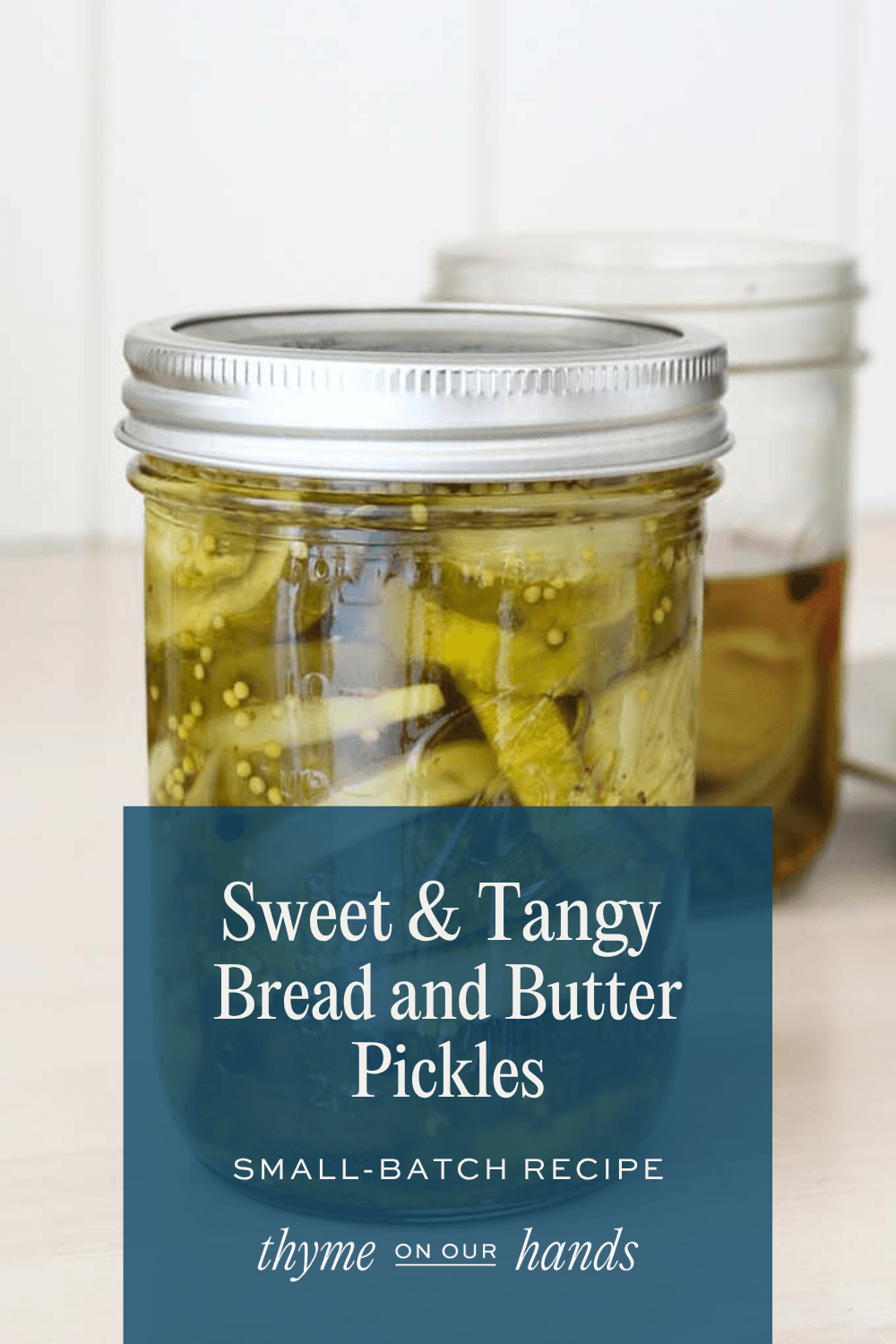
Bread and Butter Pickles
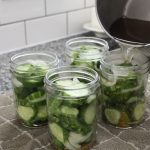


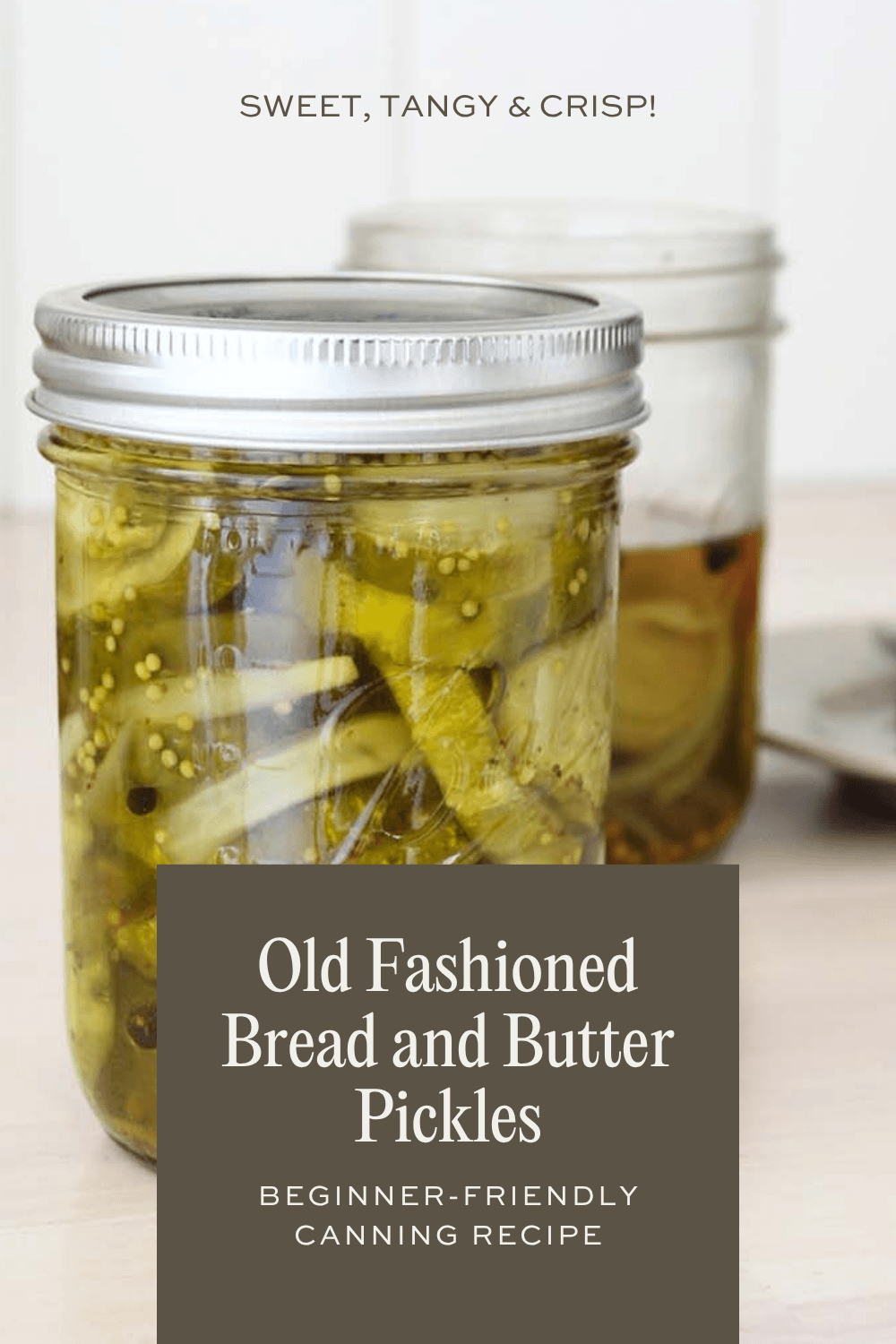
If you’re looking for an easy way to preserve summer cucumbers, this bread and butter pickles canning recipe is a must-try. These pickles are sweet, tangy, and crisp, with that classic old-fashioned flavor everyone loves. Using a simple water bath canning method, you can stock your pantry with homemade pickles that taste even better than store-bought.

This post may contain affiliate links, including Amazon Associates links. As an Amazon Associate, I earn from qualifying purchases. If you choose to purchase through my links, it truly helps support my blog and keeps this content free. Please see my full disclosure policy here.
We started our first raised bed vegetable garden in 2020. That spring, we planted six cucumber seedlings and hoped for the best. By late July, we were surprised by how many cucumbers we harvested. After making and eating all the refrigerator pickles we could, we needed an easy canning recipe to enjoy pickles all winter.
After trying several recipes, I perfected this sweet, tangy bread and butter pickle recipe. Now, I skip refrigerator pickles and can all of the cucumbers from the garden.
We still plant six cucumber plants each year, and they seem to produce all at once — within 48 hours, I have a big pile of cucumbers! This small-batch recipe uses just 2½ pounds (about 12-15) of pickling cucumbers, matching my average harvest. That said, you can easily double or triple the recipe if needed.
Why you’ll love this bread and butter pickle recipe
- Beginner-friendly canning recipe using a simple water bath method
- Classic bread and butter pickle flavor that’s sweet, tangy, and crisp
- Perfect for preserving fresh cucumbers from your garden or farmers market
- Small-batch recipe that’s easy to double or triple
- Reliable and easy to follow, even if it’s your first time canning
Don’t forget to pin this recipe!
Tips for the best flavor and texture
Everyone wants crisp pickles, and there’s plenty of advice for preventing mushiness. Some suggest adding oak, grape, or tea leaves, or calcium chloride, but I keep it simple. I get crisp pickles by picking cucumbers at the right time, canning them as soon as possible, and using the fresh-pack method.
Pick your cucumbers at the right time
I always pick my cucumbers when they’re small, and I like to pick them in the morning, ideally before 10 am. Morning cucumbers are firmer and sweeter. If buying from a farm stand, choose firm cucumbers.
Process them as soon as possible
Another important tip for crisp pickles is to process them as soon as possible. Try not to wait more than 48 hours between picking and packing them in jars. Sometimes you have to make time, even if it’s not perfect. A little extra effort now will pay off in the winter when you’re enjoying crisp pickles. I keep my cucumbers in the fridge’s crisper drawer while I wait for the rest of the harvest over those two days.
Try the fresh-pack method
Fresh-pack describes a method of canning in which raw vegetables are packed into jars and covered with a hot liquid. These filled jars are then processed in a water bath canner. This is the opposite of hot-packed pickles, in which the cucumbers are first boiled in the pickling liquid, then packed into jars and processed.
I think the fresh-pack method is best for crisp pickles. I’m not fast enough for the hot-pack method. When I tried it, the last jars ended up overcooked because they had sat in the hot pickling liquid for too long. The fresh-pack method reduces boiling time, so the pickles stay crisp.
Ingredients for bread and butter pickles
- Canning salt
- Fresh pickling cucumbers
- Onion
- White vinegar (5% acidity)
- Apple cider vinegar
- Mustard seed
- Celery seed
- Allspice berries
- Turmeric powder
Tools you’ll need
- 4 pint jars — I like to use wide-mouth pint canning jars for almost all of my canning
- 4 corresponding jar bands and new lids: You won’t need these if you’re using new jars
- Large bowl
- Clean tea towels
- Colander
- Water bath canner — I use a large stockpot, but you can also buy a canner online. Most come with a rack.
- Canning rack — Protects jars from direct contact with the bottom of the canner or stockpot.
- Jar lifter* — Used to move the jars in and out of the canner
- Bubble popper* — This handy tool helps remove bubbles from your jars and features a headspace gauge on one side
- Medium saucepan
- Clean dishcloth
* I would recommend buying a basic kit so you don’t have to purchase the jar lifter and bubble popper separately. I bought this handy canning tool kit on Amazon when I started canning back in 2020!
How to can bread and butter pickles
These old-fashioned bread and butter pickles were one of the first things I ever canned. The process is easy for beginners and doesn’t require much hands-on time. You can double or triple the recipe if you have more cucumbers.
Step 1: Prep the cucumbers and onions
Start by rinsing your fresh cucumbers under cold water. Next, cut off the ends and slice each cucumber into ¼ inch pieces.
Next, cut the onion into thin slices. Then, mix the cucumbers and onions in a large bowl.
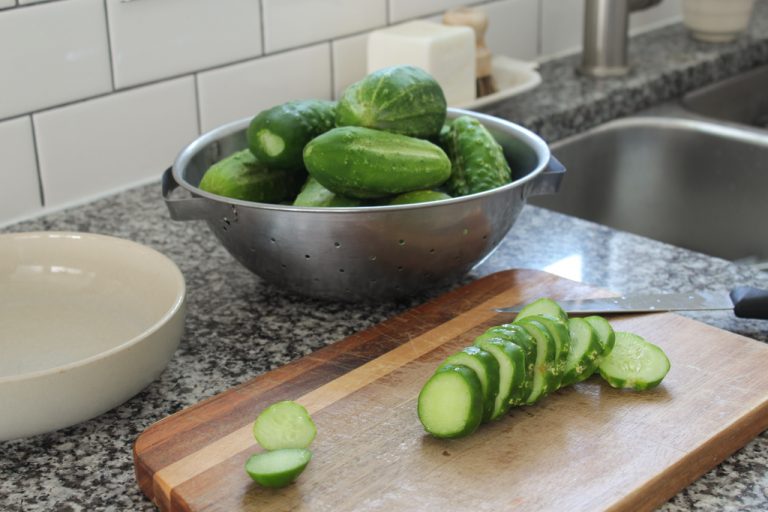 Remove the ends of the cucumbers
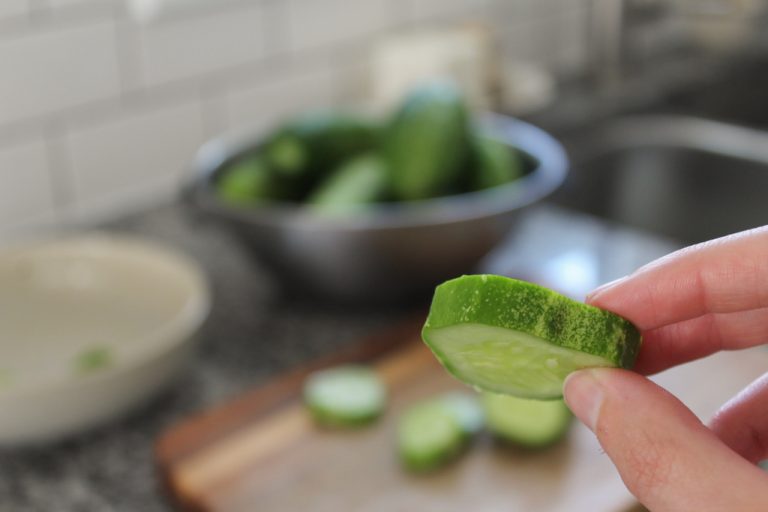 Cut the cucumbers into 1/4-inch slices
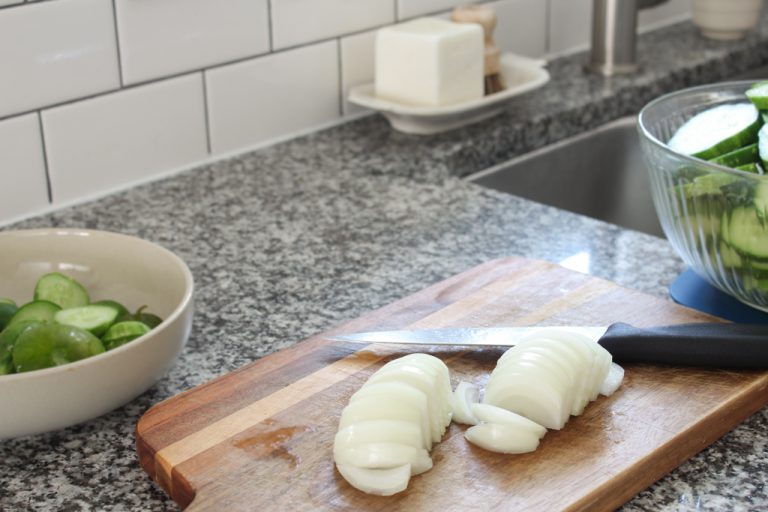 Slice the onion into thin slices
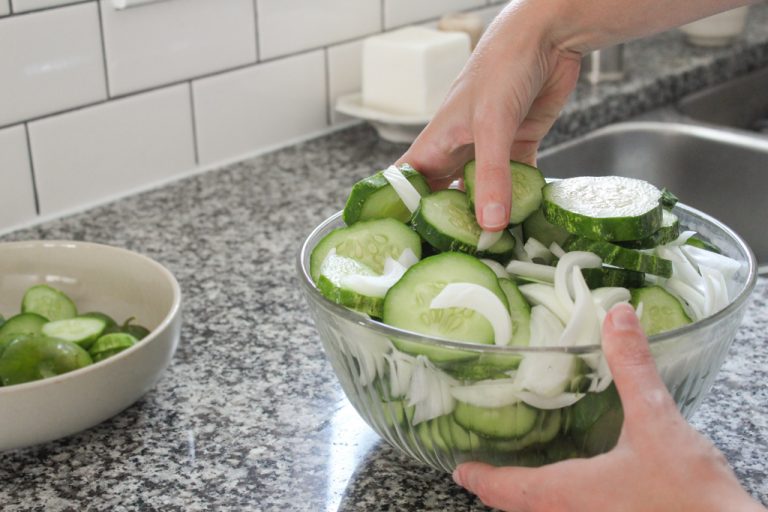 Mix the onion and cucumber in a large bowl
Now, sprinkle the canning salt over the sliced cucumbers and onions, and cover the bowl with a clean tea towel. Scatter ice cubes over the tea towel.
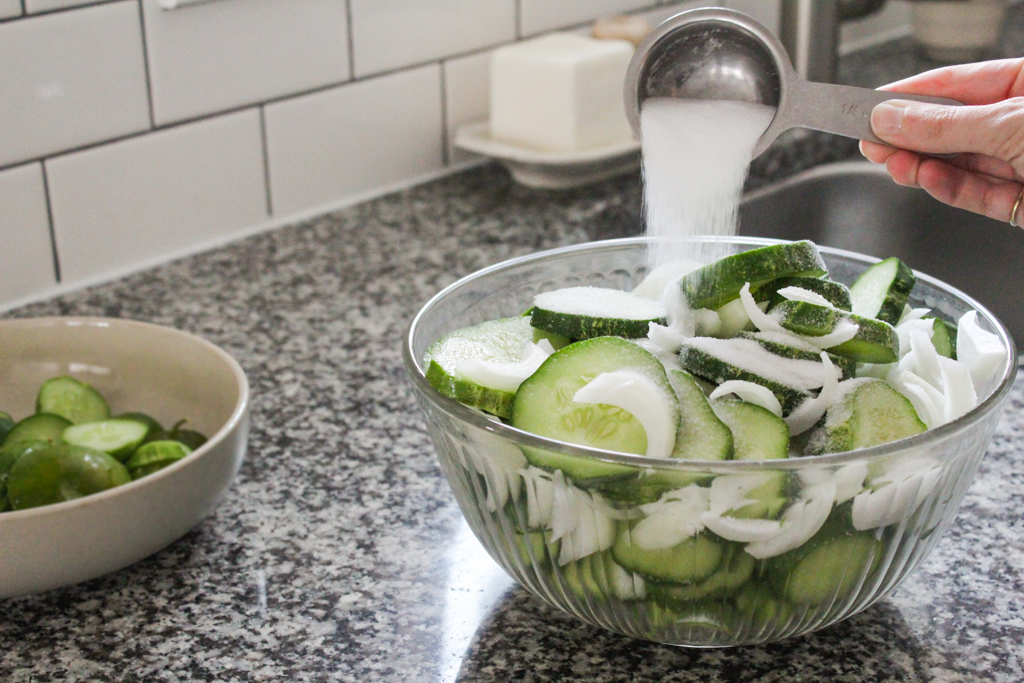 Sprinkle salt over the cucumber mixture
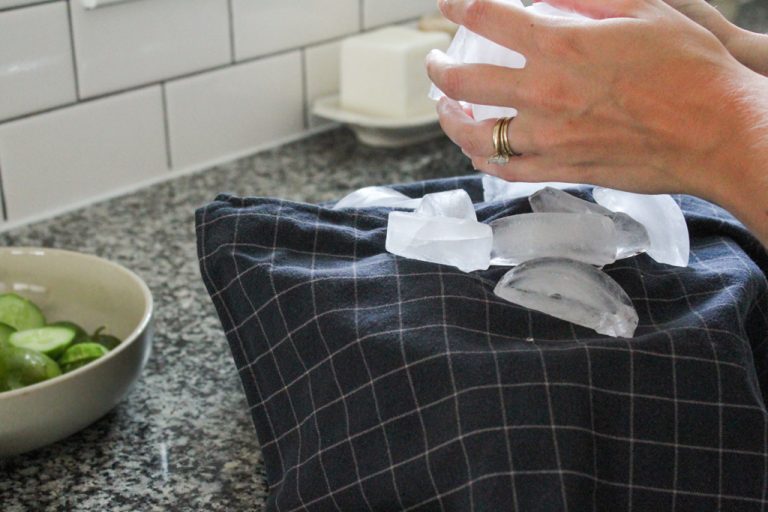 Scatter ice over the tea towel
Let the mixture sit for 2½ hours. You can put the bowl in the fridge or leave it on the counter. Be sure to arrange the towel so the melting ice doesn’t drip everywhere!
Step 2: Pre-heat the jars
About 30 minutes before the cucumbers are ready, start pre-heating your jars. If you’re using new jars, remove the bands and lids and wash all parts with hot, soapy water. Then, place the jars on the rack of your water bath canner. If you’re reusing jars, inspect them for damage before washing and placing them in the canner. Be sure to set out new lids for your jars!
Fill the canner with water so the jars are covered by 2 inches. Bring it to a simmer at 180°F and let the jars simmer for 10 minutes. Keep them simmering until you’re ready to fill them. This helps prevent the jars from cracking.
Step 3: Make your pickle brine
With 15 minutes left, combine white vinegar, apple cider vinegar, and sugar in a medium saucepan. In this recipe, white vinegar adds tartness to the pickling liquid, while apple cider adds a sweet, lightly fruity flavor.
Bring this mixture to a boil, stirring until the sugar dissolves.
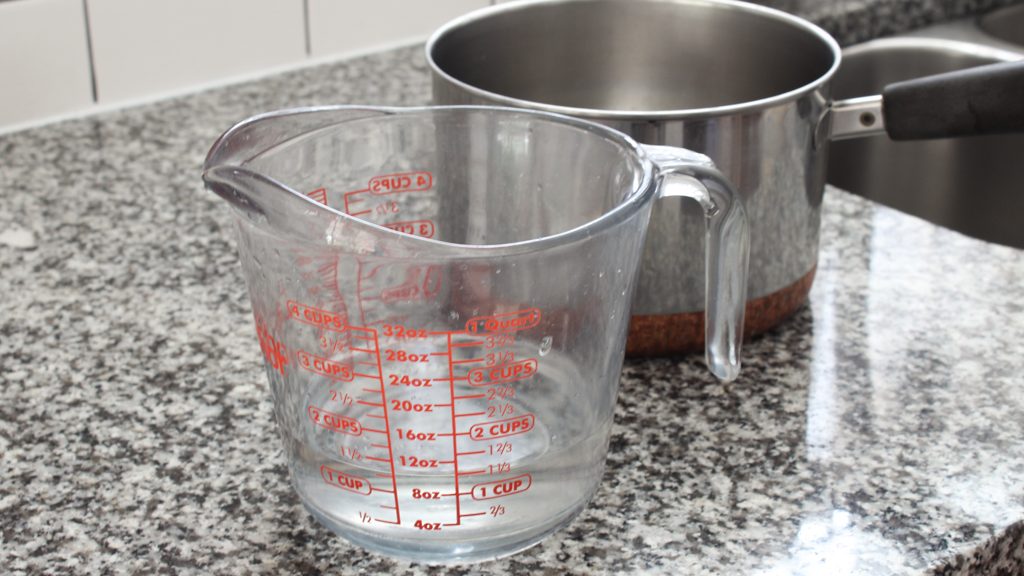
Step 4: Assemble your ingredients and fill the jars
Now, pour the sliced cucumbers and onions into a strainer and rinse them under cold running water to remove the salt. Let the cucumber mixture drain.
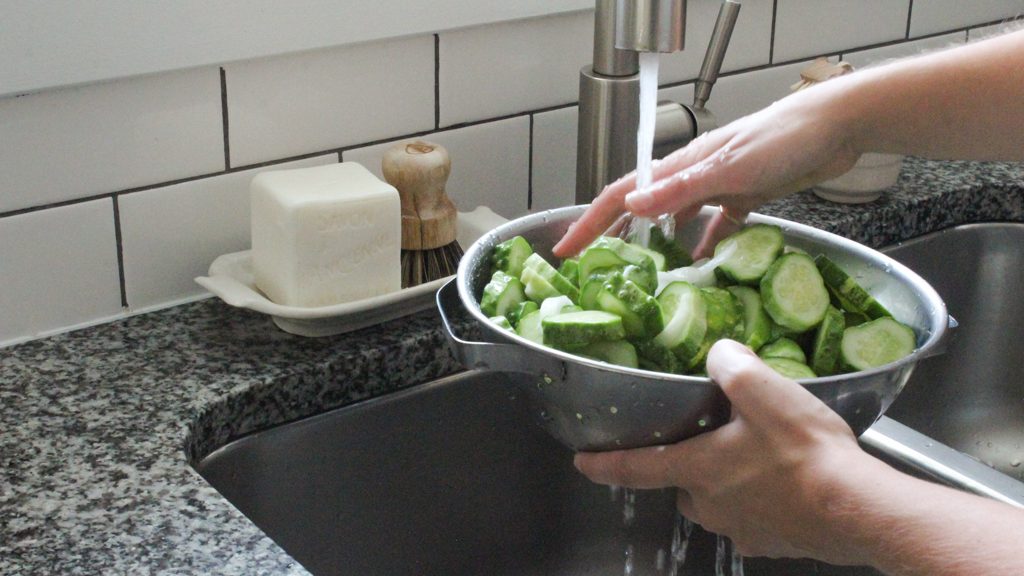
While the pickling liquid comes to a boil, use the jar lifter to lift the jars out of the canner. Place them on your tea towel.
Working quickly, add 1 teaspoon mustard seed, ¼ teaspoon celery seed, ¼ teaspoon allspice berries, and ⅛ teaspoon turmeric powder to each jar. Then, pack the sliced cucumbers and onions into the jars, leaving ½ inch headspace. Now, pour or ladle the hot pickling liquid over the packed jar. Be sure to leave ½ inch headspace.
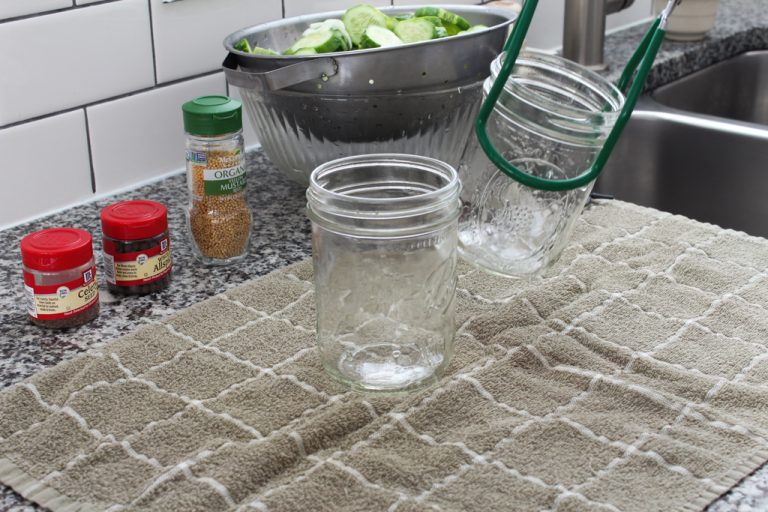 Pull the jars and lids from the water bath canner
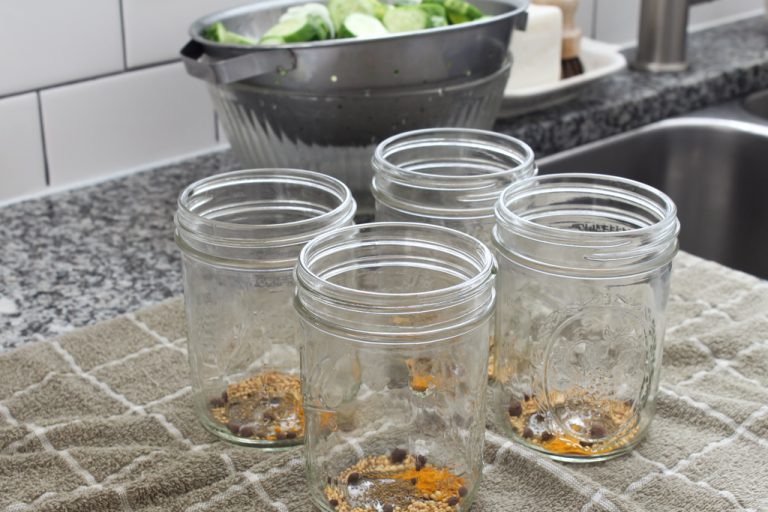 Fill the jars with the spices
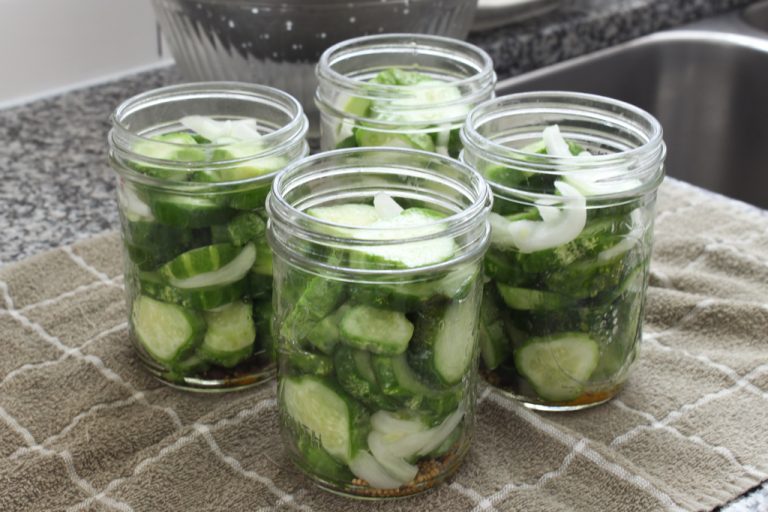 Pack the cucumber slices into the jars
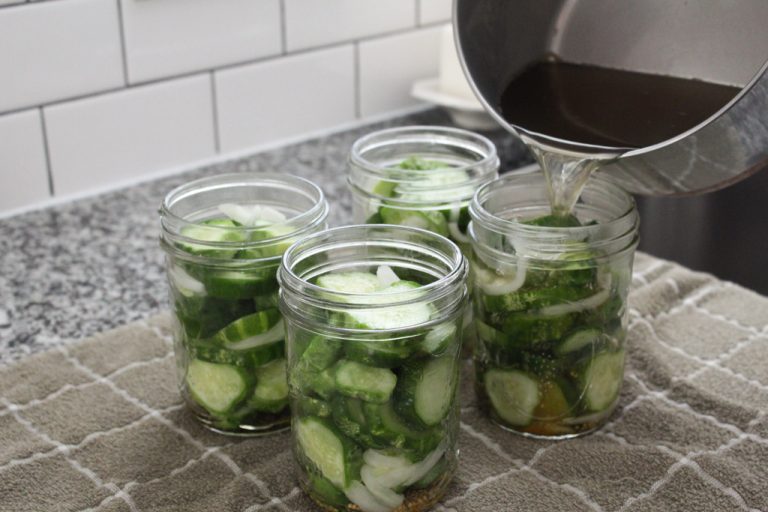 Pour the pickling liquid over the top of the cucumber slices, leaving a 1/2 inch headspace
Wipe jar rims with a clean, damp cloth. Place clean, new lids on the jars and screw on bands until fingertip-tight.
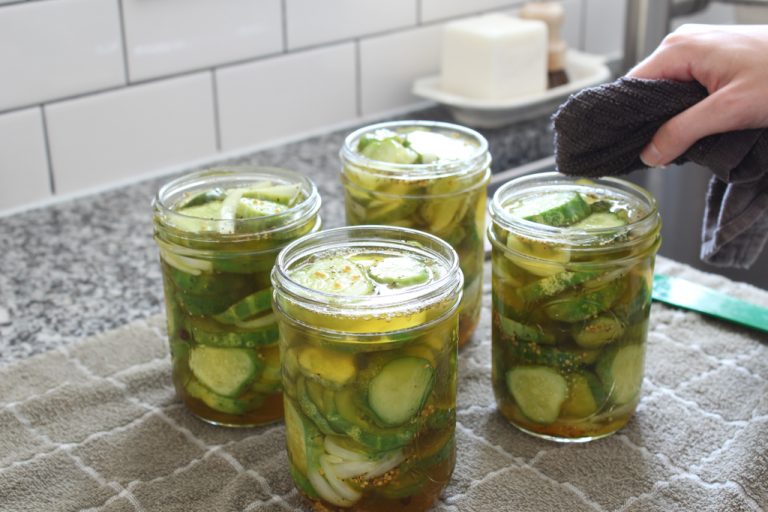 Wipe the rims of the jars
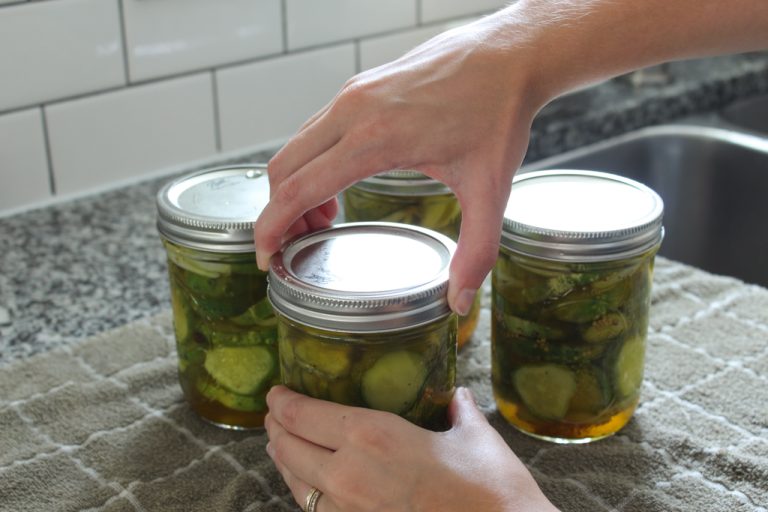 Tighten the bands to fingertip-tightness
Step 5: Process the jars
Use the jar lifter to place the jars into the simmering water bath canner. The water should cover the jars by at least 1 inch. If it doesn’t, add more boiling water. Put the lid on the canner and turn the heat to medium-high. When the water reaches a rolling boil, start your timer and process the jars for 10 minutes.
Adjusting processing time for your elevation
When processing at altitudes above 1,000 feet above sea level, you must adjust your processing time to ensure safe canning. This is because the barometric pressure at higher elevations affects the temperature at which water boils. If you’re at an elevation higher than 1,000 feet above sea level, adjust your processing time using the chart below.
| Altitude in feet | Increase processing time by |
|---|---|
| 1,001 to 3,000 | 5 minutes |
| 3,001 to 6,000 | 10 minutes |
| 6,001 to 8,000 | 15 minutes |
| 8,001 to 10,000 | 20 minutes |
For example, I am 2,600 feet above sea level. So, I need to add 5 minutes to the processing time for a total processing time of 15 minutes.
Step 6: Cool jars, undisturbed
After processing, turn off the heat, remove the canner lid, and let the boil stop. Carefully remove the jars from the canner using the jar lifter, then place them on a tea towel. Let them cool for 12 hours, undisturbed.
Step 7: Test the seals
After 12 hours have passed, test the seals on your jars by pressing the center of each lid to see if it is flat. Double-check your seals by removing the bands from the jars and holding each jar up by the edge of the lid for a few seconds. If the seal fails, store the jar in the refrigerator and eat the pickles within 4 weeks.
Step 8: Store your canned pickles
To properly store your bread and butter pickles, wipe the jars with a clean, damp cloth to remove any sticky residue. Label each jar with the date and keep them in a cool, dry, dark place. The pickles will reach their best flavor in about 4 weeks.

Frequently asked questions: bread and butter pickles
Do I need to water-bath can bread and butter pickles?
Yes, water bath canning is necessary to safely preserve pickles with this recipe.
How do I keep pickles crisp?
Using fresh cucumbers and not overcooking the pickles in the brine helps maintain crisp texture.
Can I reduce the sugar in bread and butter pickles?
You can slightly reduce sugar, but it will change the classic sweet flavor and balance of the brine.
How long do bread and butter pickles last when canned?
Properly water-bath canned pickles can last up to 18 months when stored in a cool, dark place. Once you open a jar, store it in the fridge and eat the pickles within 6 to 8 weeks.
Bread and butter pickles are a classic pantry staple that add sweet, tangy flavor to any meal. Once you try this easy water bath canning recipe, you’ll never go back to store-bought pickles. Whether you’re preserving a garden harvest or stocking your pantry, this recipe is a simple, reliable way to enjoy homemade pickles year-round. If you tried this recipe and loved it, I would appreciate it if you gave it 5 stars!