Cottage-Style Cabinet Curtains
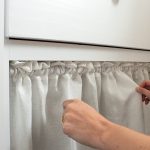
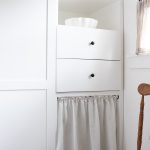
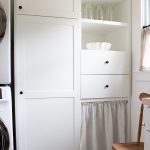

These DIY cottage-style cabinet curtains are an easy, budget-friendly way to hide clutter and add charm without installing cabinet doors. This simple DIY project shows you how to make pantry cabinet curtains using affordable materials. Whether you want to update a small pantry or bring cozy character to your kitchen, this budget-friendly beginner sewing project creates a soft, lived-in cottage feel.

This post may contain affiliate links, including Amazon Associates links. As an Amazon Associate, I earn from qualifying purchases. If you choose to purchase through my links, it truly helps support my blog and keeps this content free. Please see my full disclosure policy here.
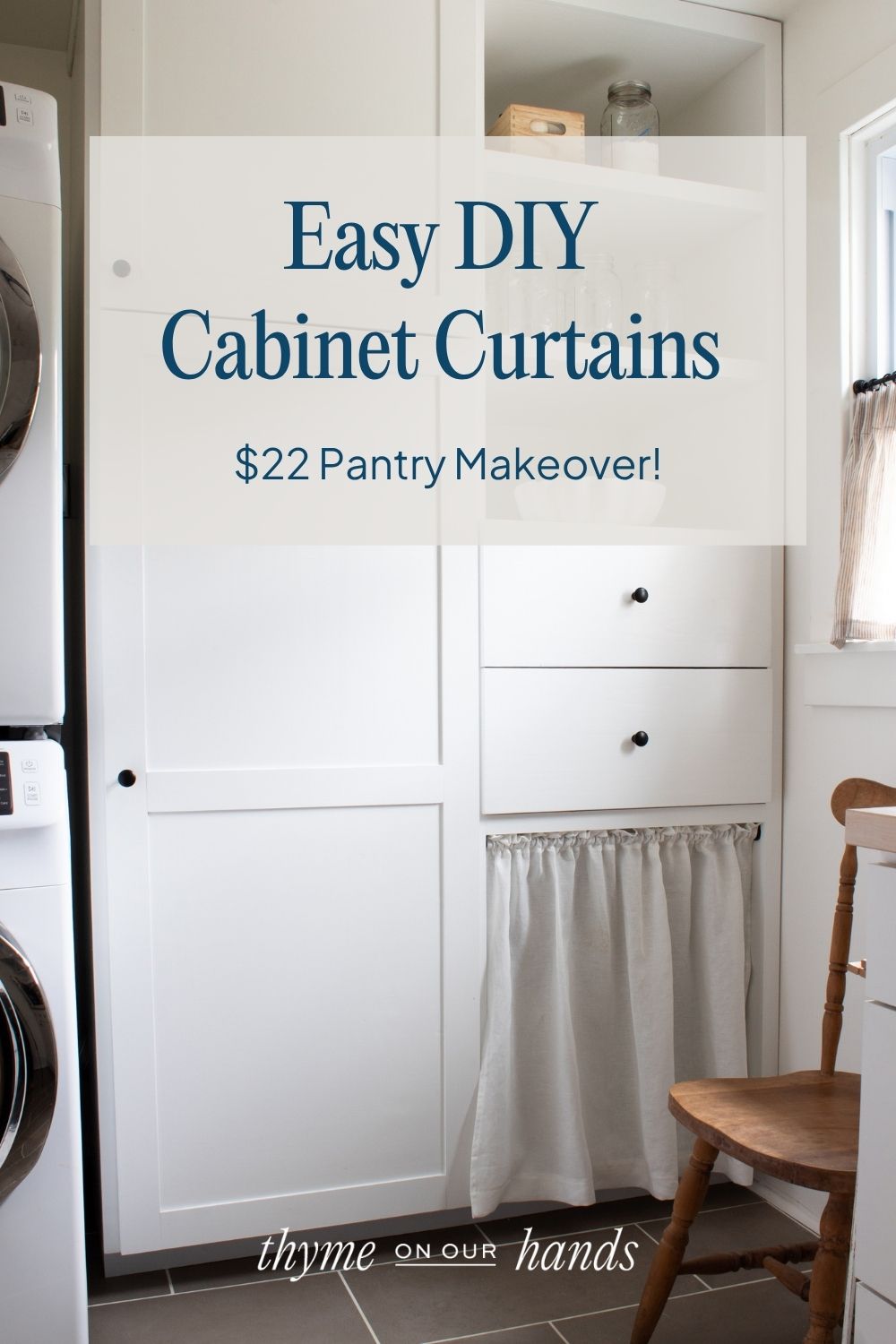
Rick built lovely floor-to-ceiling white shaker cabinets for our pantry almost a year ago. We planned to add a counter to connect them to another set of cabinets along the wall, but we still haven’t gotten to it. I’ve been looking at clutter for months, and it was really starting to bother me!
While I was trying to figure out how to hide the mess, I kept seeing photos of sink skirts and cabinet curtains on Pinterest and Instagram. Skirted kitchen cabinets are definitely coming back in style, and I couldn’t resist giving it a try!
Making this linen curtain panel was a quick and easy sewing project that solved the problem in this corner. It took about an hour and only needed a yard of fabric. Even better, it cost just $22!
This is a beginner-friendly sewing project. If you can sew a straight line with a sewing machine, you can make these charming cottage-style pantry cabinet curtains!
Why you’ll love these cottage-style cabinet curtains
- Budget-friendly alternative to cabinet doors
- Beginner-friendly DIY project
- Adds lived-in, cottage-inspired charm
- Great for small or awkward spaces

Where to use cabinet curtains in your home
Cabinet curtains aren’t just for pantries. They’re a versatile and budget-friendly way to hide clutter and add a soft, cozy touch anywhere in your home. If you have lower open shelves, cabinet curtains can hide less attractive storage while keeping the space functional. Here are a few spots where they work well:
- Under the kitchen sink: This space is often one of the hardest areas to keep tidy. A cabinet curtain is a simple way to conceal cleaning supplies while still keeping everything easy to access.
- Bathroom vanity: Cabinet curtains look great in bathrooms, especially as a replacement for regular vanity doors. They soften the space and go well with cottage, farmhouse, or vintage-inspired decor.
- Laundry room: Use cabinet curtains to cover storage shelves or utility areas. It’s a fast way to make the space feel more finished without a full renovation.
- Built-ins or furniture pieces: You can use cabinet curtains on built-in shelves, media consoles, or even bookshelves to add texture and hide things you don’t want on display.
Wherever you use them, cabinet curtains are a simple way to add warmth and function without spending money on new cabinets.
Materials needed for cabinet curtains
- Fabric: You’ll need fabric that is at least twice as wide as the area you want to cover.
- Coordinating thread
- Tension rod or curtain rod with mounting hardware
- Sewing machine
- Flexible measuring tape
- Fabric scissors
- Iron and ironing board
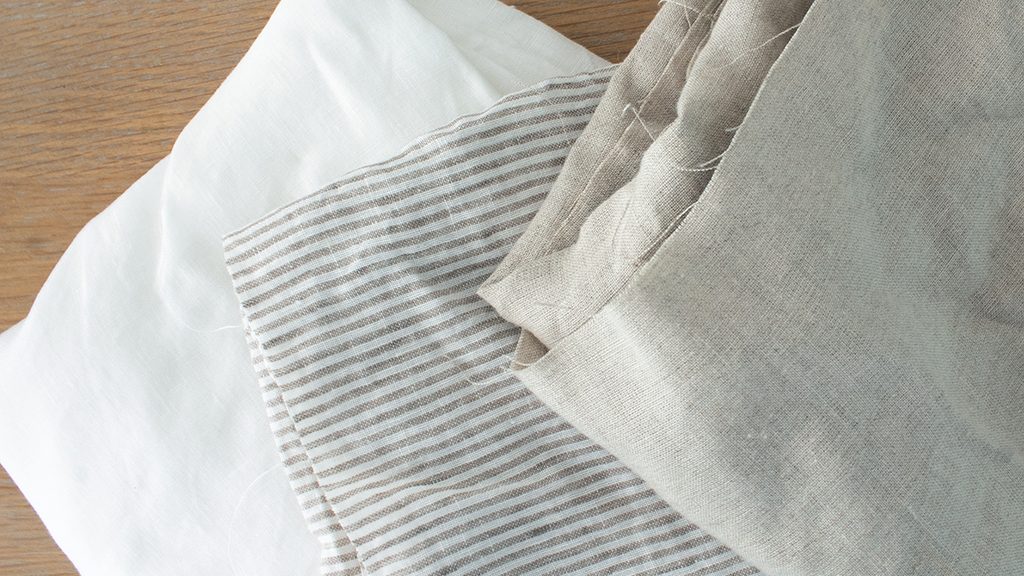
Best fabric for cottage-inspired cabinet curtains
Start by choosing your fabric. For a soft, cottage-inspired look, lightweight fabrics like linen or cotton are best. These fabrics hang naturally and give that relaxed, lived-in feel.
I chose a white mid-weight linen for this project, but you can use any color or pattern you like. Just remember, since the curtain panels are gathered, you’ll need fabric that’s at least twice as wide as your cabinet opening.
How to hang cabinet curtains
You’ll need to decide how you want to hang your cabinet curtains. This choice depends on how many openings you’re covering and the overall look you want to achieve. You have two main options:
Inside mount:
Inside mount curtains are installed inside the cabinet frame using either a spring-tension rod or small mounting brackets. This option works well for one or two smaller openings and creates a more built-in, tailored look. It’s also a great choice if you want to avoid drilling visible holes into the face of your cabinet, making it more renter-friendly (especially when using a tension rod).
Outside mount:
Outside mount curtains are installed on the face of the cabinet using a standard curtain rod and mounting hardware. This is a better option if you want to cover a larger area or create the look of a continuous curtain across multiple openings.
For either hanging method, a thin café-style curtain rod looks best, usually about 1/2 inch diameter. If you’re covering a wider area or using heavier fabric, a 5/8-inch rod will give better support.
For this project, I used a simple black tension rod. It was affordable, easy to install, and worked perfectly for an inside mount!
How to make cabinet curtains (Step-by-step)
Before you start: Prep your fabric
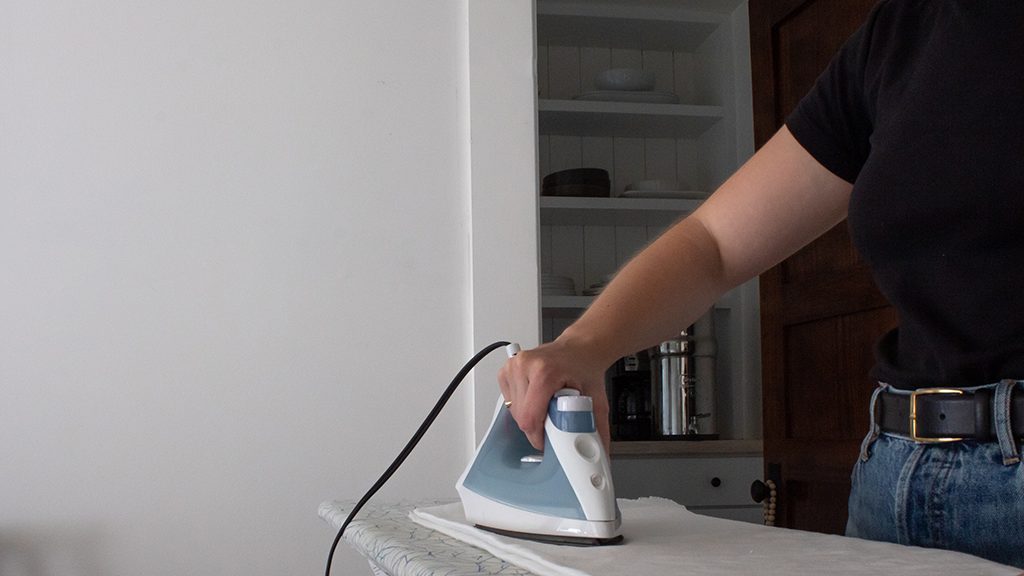
Before you start sewing, wash and dry your fabric to pre-shrink it. This helps prevent your curtain from shrinking later. Then, be sure to iron your fabric. This makes it much easier to measure and sew accurately.
Step 1: Measure your cabinet and cut your curtain width
Start by measuring the width of your cabinet opening. Then, double that number to determine how wide your fabric should be. This extra width creates that soft, gathered look.

Step 2: Cut your fabric
Using your measurements, cut your fabric to the width you calculated. Leave the fabric a bit longer than you think you’ll need. You can trim and hem it later to get the perfect fit.
Step 3: Hem the sides
To create clean edges, fold each side of the fabric over by 1/4 inch toward the wrong side. Then fold it over another 1/4 inch to hide the raw edge. You can press this with an iron or simply finger-press it in place.
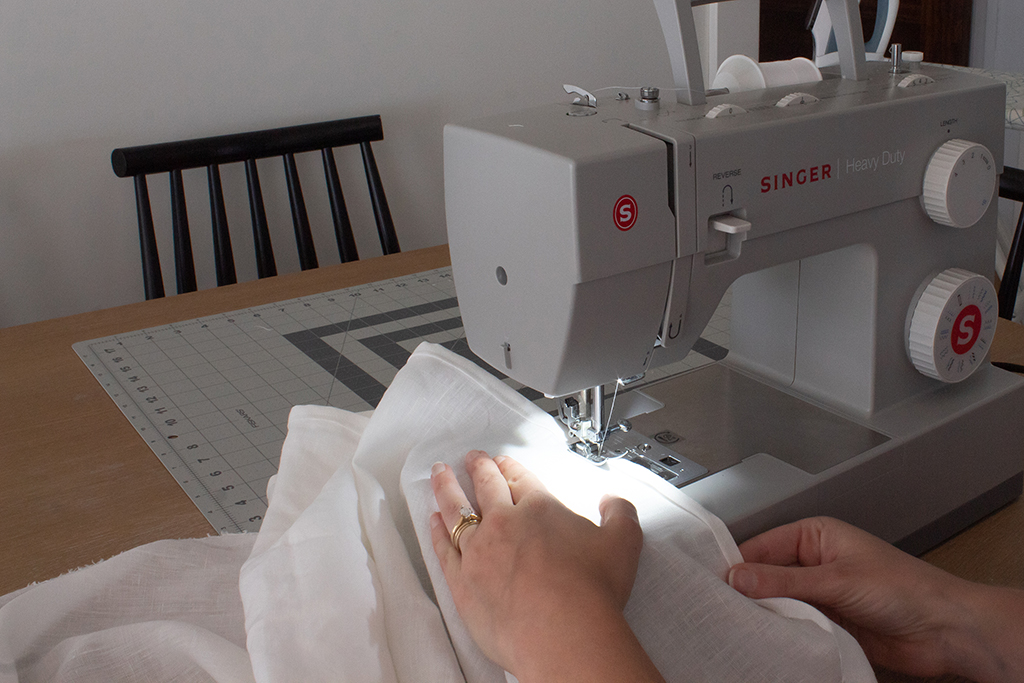
Sew a straight stitch down one side, backstitching at both ends. Repeat on the other side.
Step 4: Sew the header (ruffle + curtain rod casing)
Next, make the header for the curtain panel. This part includes the ruffle above the curtain rod and the casing (or pocket) that the rod slides through.
How to determine your header height
First, determine how much fabric you’ll need to fold down to create your header using this formula:
Total header height = ruffle height + rod casing + seam allowance
Here’s what that means:
Ruffle height: This is the small section of fabric that sits above the curtain rod.
→ Measure from the top of your cabinet opening to the top of your curtain rod to decide what looks best. If you’re not sure, try draping the fabric over the rod and adjust it until it looks right.
Rod casing: This is the space needed for your curtain rod to slide through.
→ For a standard 1/2-inch curtain rod, you’ll want about 1 ½ inches of space. For a 5/8-inch rod, 2 inches.
Seam allowance
→ Add 1/4 inch to the fold when sewing to secure it.
For example, my header was:
3/4 inch (ruffle) + 1 ½ inches (rod casing) + 1/4 inch (seam allowance) = 2 ½ inches total
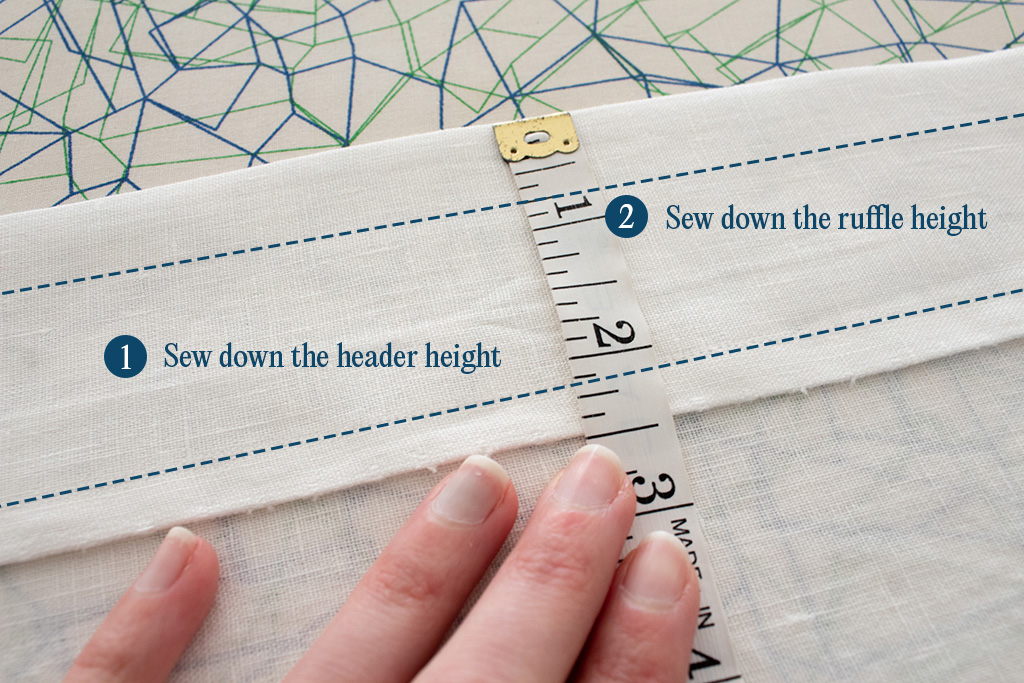
Once you’ve calculated your total header height, fold the top edge of your fabric down to match that measurement and press it flat to create a crisp edge.
Sew a straight line across the panel along the bottom edge of this fold. This creates the casing for your curtain rod.
To form the ruffle, sew a second straight line across the panel, positioned below the top edge by the amount you chose for your ruffle height.
Step 5: Hemming your curtain
Before hemming, slide your curtain onto the rod and hang it up to check the length.
Once you know where you want it to fall, mark the length with a pin and take the curtain back down.
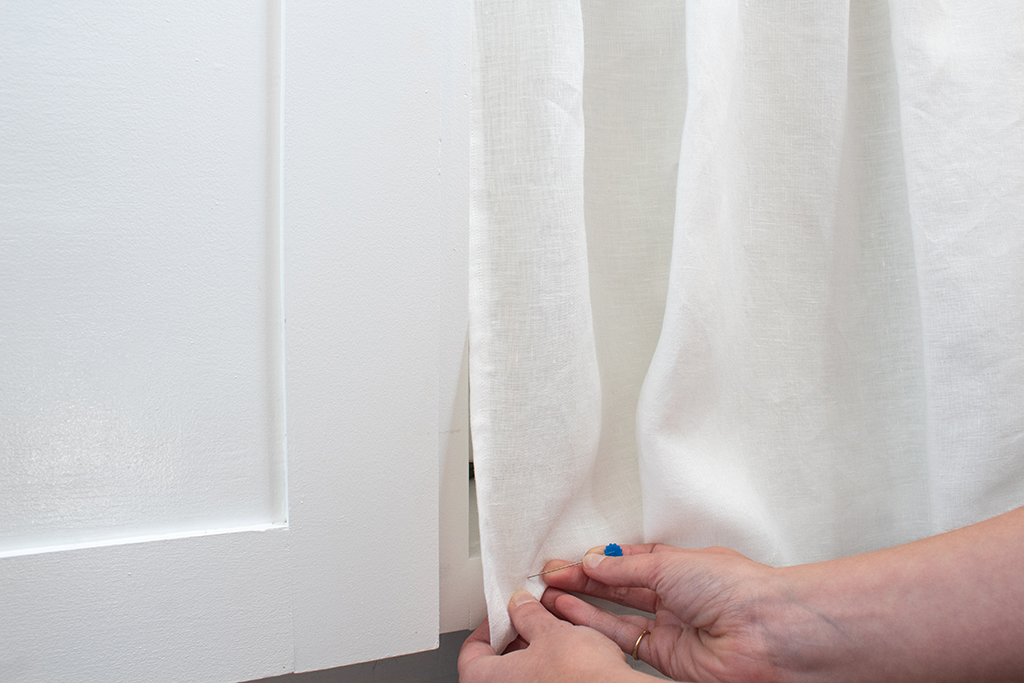
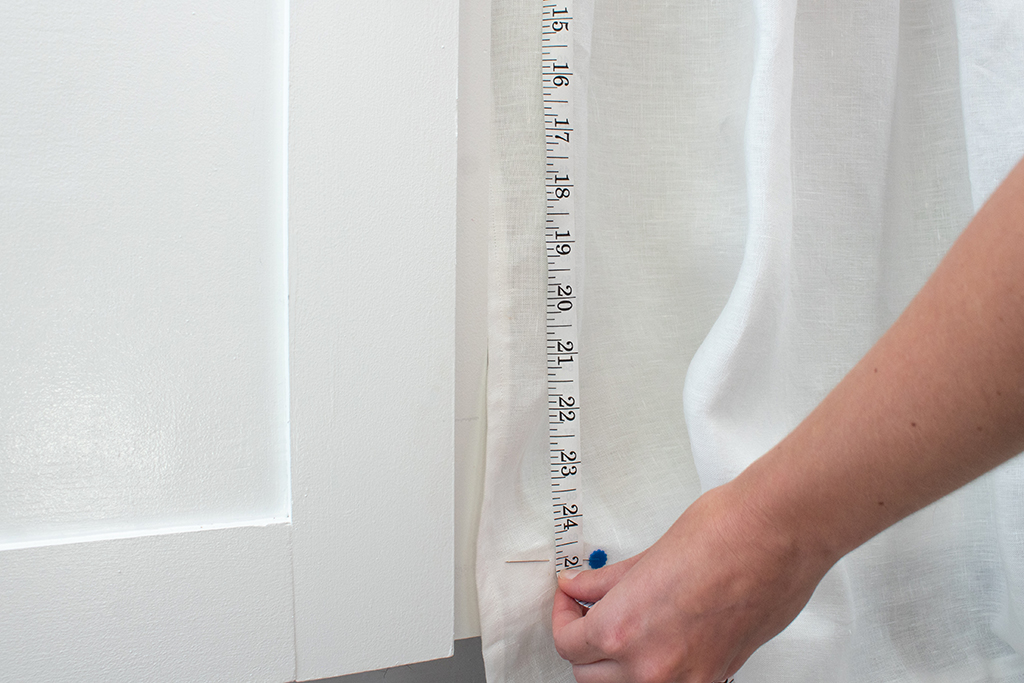
Option 1: Simple hem (beginner-friendly)
Fold the bottom edge up 1/4 inch, then fold it again another 1/4 inch to hide the raw edge. Sew a straight stitch along the edge to create a clean, simple hem.
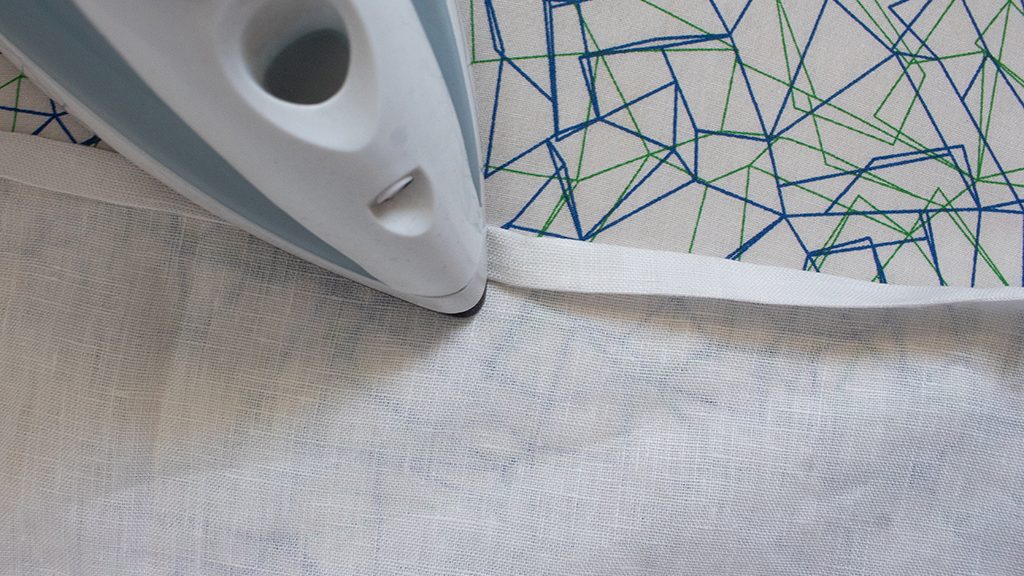
Option 2: Add a wider footer (decorative option)
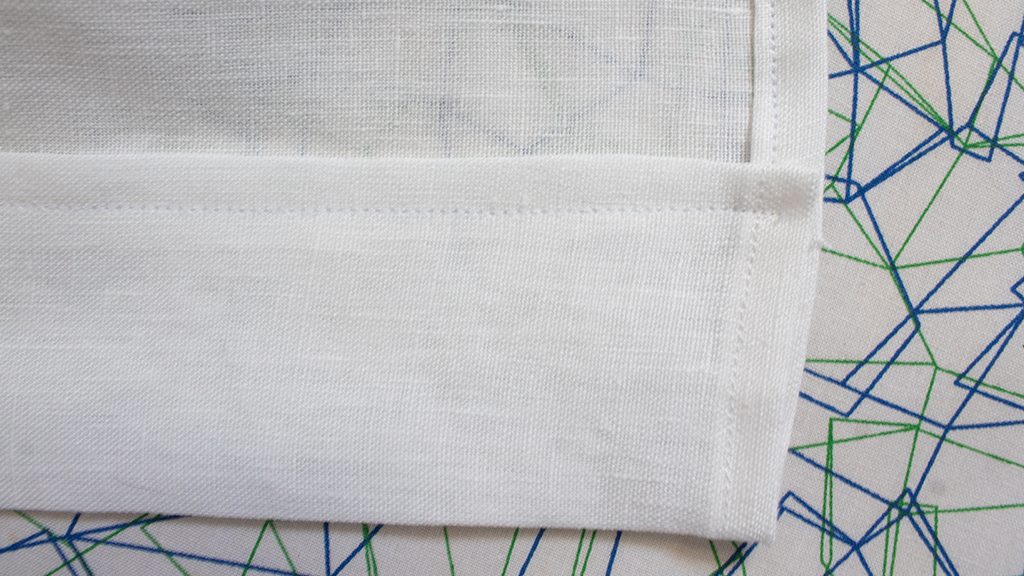
If you’d like a more finished look, you can create a wider hem or “footer.” Fold the bottom edge up several inches (depending on your preference), pressing it flat, and sew along the top of the fold to secure it.
I added a 2-inch footer. This meant adding 4 inches to the curtain’s total length, plus a 1/4-inch seam allowance to hide the frayed edge.
Step 6: Hang your cabinet curtains
Once your curtain is finished, slide it onto your curtain rod and hang it. Adjust the fabric so it gathers evenly across the rod.

That’s it! Now you’ve got a simple, cozy cabinet curtain that instantly adds charm and hides clutter.
Before and after!

FAQ: Cabinet curtains
Are cabinet curtains in style?
Yes, cabinet curtains (sometimes called sink skirts) are making a comeback, especially in cottage, farmhouse, and vintage-inspired kitchens. They’re an easy way to add softness and character while hiding clutter, and you don’t have to spend money on cabinet doors.
Can you make cabinet curtains without sewing?
Yes! If you don’t have a sewing machine, you can use iron-on hem tape to finish the edges. You can also use tea towels or pre-finished fabric panels for an even quicker no-sew option.
What fabric works best for cabinet curtains?
Lightweight fabrics like cotton or linen work best. They hang nicely, gather well, and create that soft, relaxed look that works especially well in cottage-style spaces. Avoid heavy fabrics, which can look bulky and be harder to gather.
How do you hang cabinet curtains without drilling?
A spring tension rod is the easiest no-drill option. It fits inside the cabinet opening and can be adjusted to stay in place without hardware. This makes it a great choice for renters or anyone who wants a temporary solution.
What size curtain rod should you use?
A thin café-style curtain rod, usually about 1/2 inch in diameter, works best for most cabinet curtains.