My Simple Weekly Meal Planning System
As a mum, I make most of the food decisions for our family — and every week, I’m trying to balance a lot of priorities. I want meals that are nourishing, budget-friendly, low-waste, and realistic for busy weeks. But as someone who loves to cook, I also want to experiment with new recipes, eat fresh, seasonal ingredients, and serve food my family genuinely enjoys.
For a long time, my meal planning was driven almost entirely by inspiration. I love to cook, experiment with new recipes, and make the most of seasonal ingredients. But inspiration alone usually led to too many recipe ideas, wasted ingredients, and a plan that didn’t actually work well in real life.
Over time, I realized I didn’t need less creativity — I needed a simple structure that could support all of those goals.
Rather than reinventing the wheel every week, I built a simple framework that reduces most of the decision fatigue. It’s flexible, seasonal, and repeatable, and it keeps grocery planning simple without being strict or complicated.
For us, this system isn’t just about making my life easier. It helps us save money by making home-cooked meals so enjoyable that we actually prefer eating at home. It also enables me to feed my family balanced, nourishing meals made with real ingredients.
This system makes cooking from scratch feel sustainable for me as a busy mum. At its core, it’s built around a few guiding principles: theme-based dinners, seasonal ingredients, a protein + fiber structure, and cook-once, eat-twice meals.
A few notes before we start:
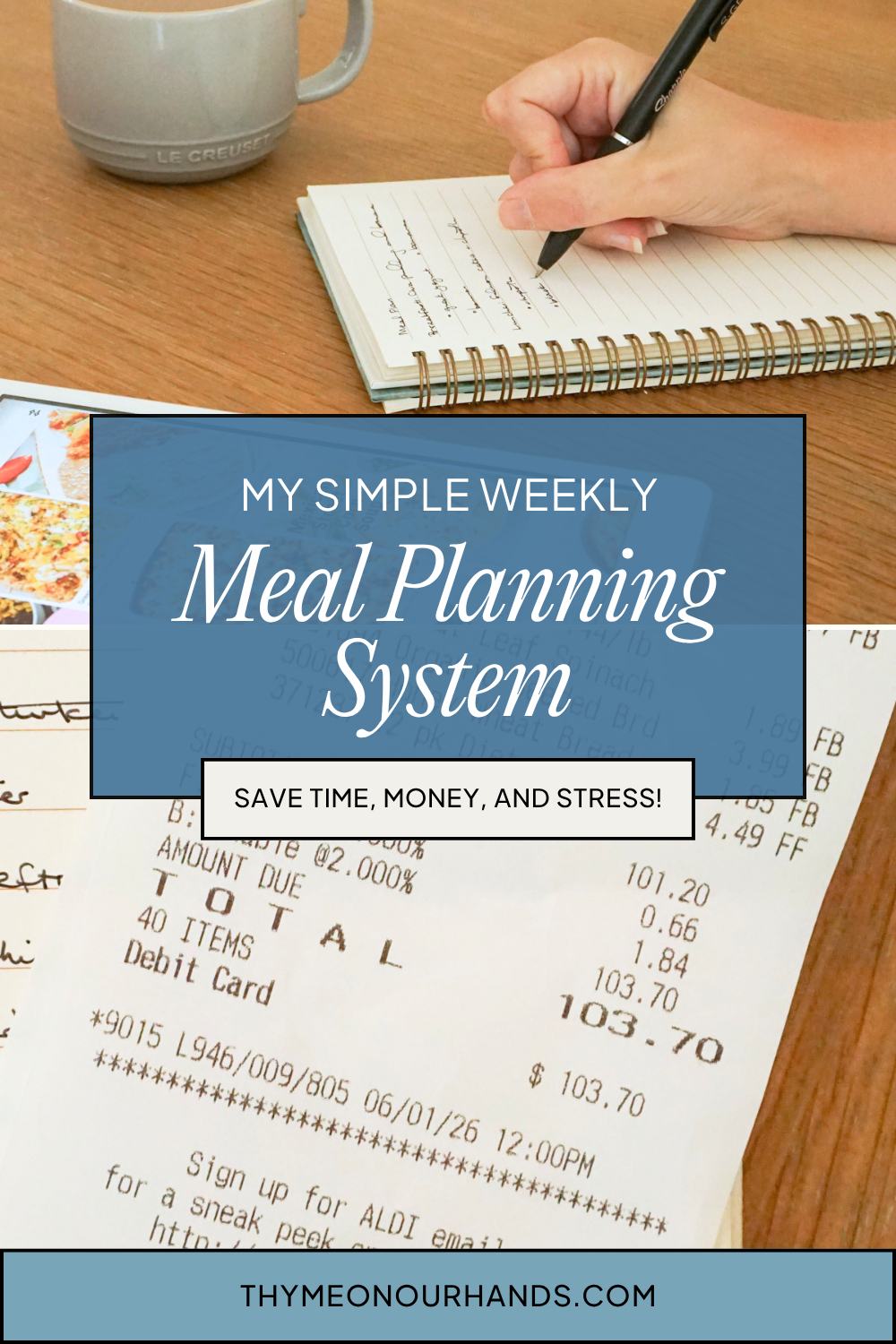
- We are a family of 3 (almost 4!) — 2 adults and a toddler
- We primarily shop at Aldi, once a week — typically on Mondays
- I budget $500 a month for groceries — averaging $100 per week and $100 for pantry restocks, snacks, and drinks
- 85-90% of our food is cooked from scratch
I only plan 3-4 dinners per week (Cook once, eat twice)
The first thing to understand about my system is that I don’t plan 7 dinners a week. I only plan 3–4. That’s because I intentionally cook enough for leftovers the following night — we cook once and eat twice.
This works really well for the way our life actually looks. Our schedule is fairly relaxed — we eat at someone else’s house, host family, or go out to eat at least once a week. If I’m hosting, I simply double one of those meals. If plans change (which they often do), meals just shift a day forward or backward.
Because meals and ingredients overlap so much, the plan stays flexible without creating food waste. That flexibility is what makes this sustainable for me long-term.

I use weekly theme nights to choose our meals
From there, I use theme nights as a simple framework for choosing those 3–4 meals. This gives me enough structure to make planning easier, while still leaving room for creativity and seasonal variety.
Our theme nights are:
- Meaty Monday (meat-focused meals — typically simple “meat + 2” meals)
- Tex-Mex Tuesday (Mexican or Southwest-inspired meals)
- Worldly Wednesday (Mediterranean, Asian, Indian, etc.)
- Tradition Thursday (traditional Italian or English meals — recipes my husband and I grew up eating)
- Fast + Fun Friday (quick, fun, or less-structured meals)
- Southern Saturday (classic Southern food)
- Sunday (Seafood Sunday in summer, Soupy Sunday in winter)
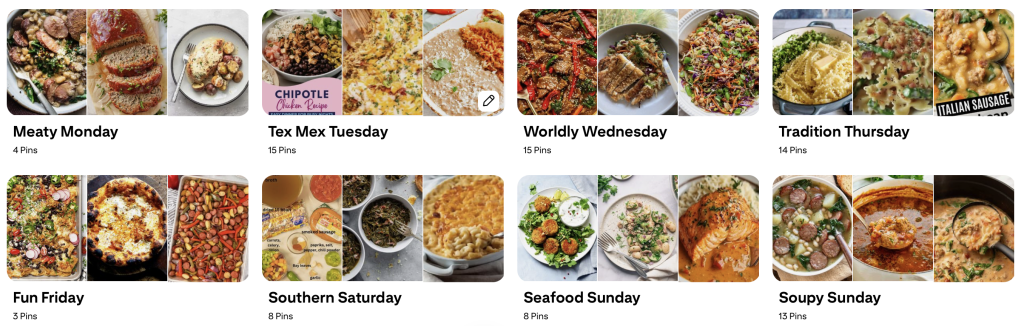
Over the years, I’ve built a large recipe collection organized around these themes — both on Pinterest and through my own recipes. Most of the meals I cook are recipes my family already knows and loves, but the themes are broad enough that I can still experiment with seasonal ingredients or try something new now and again.
I choose recipes based on seasonality and cost
When selecting meals for each theme, I focus on recipes that use overlapping seasonal ingredients and fit our budget.
I work from “seasonal capsules”, meaning I focus on a core group of ingredients and flavors each season. This approach is very similar to a capsule wardrobe. In summer, meals are lighter and built around garden produce, herbs, and citrus. In winter, I rely more heavily on pantry staples, preserved produce, and slower, heartier meals.
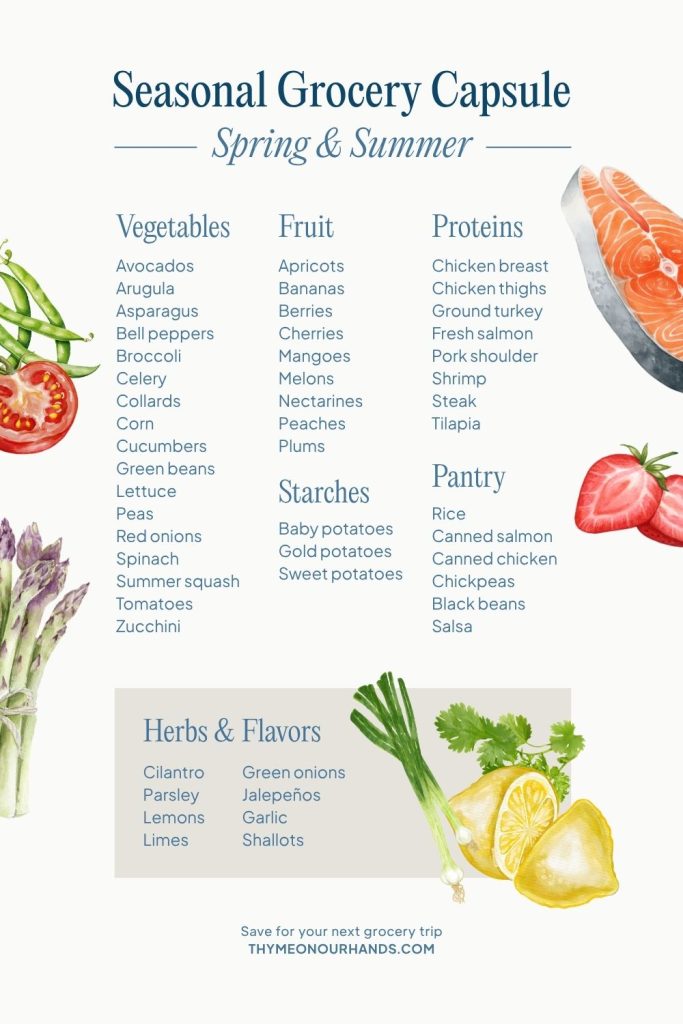
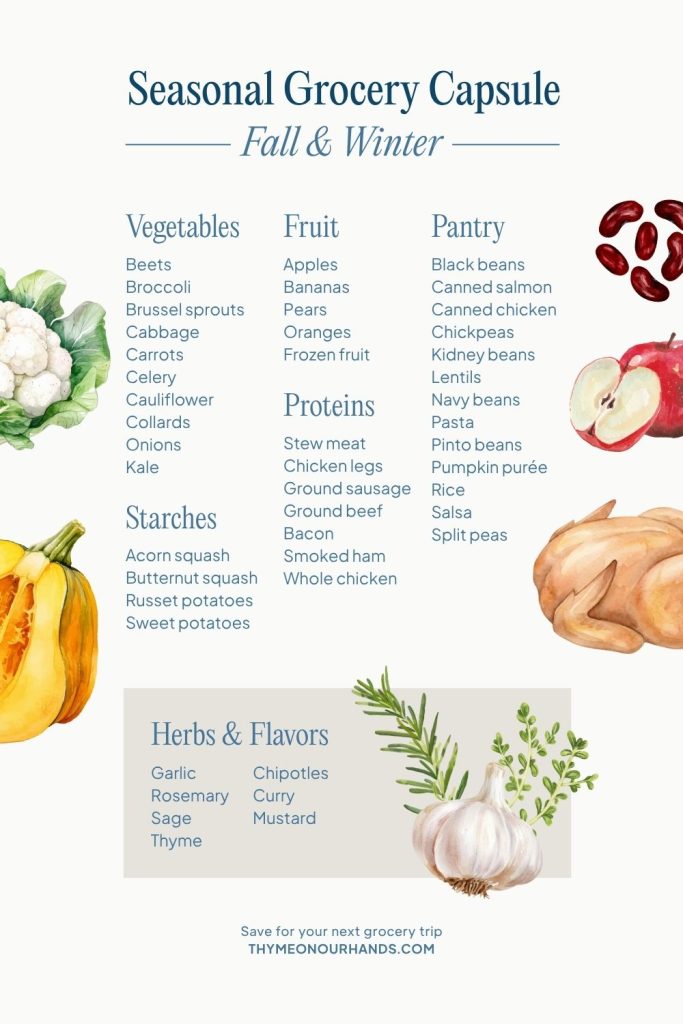
Want a printable version? Download the PDF.
I also mentally estimate ingredient costs. If it relies on expensive ingredients or specialty items, I know it’s more of a special occasion meal than an everyday dinner. But if it’s affordable, flexible, and my family genuinely enjoys it, it usually gets added to the rotation.
Because so many meals overlap in ingredients, this naturally:
- simplifies grocery shopping
- reduces food waste
- keeps costs lower (seasonal items are always cheaper)
- and makes the entire system more flexible
Every meal is built around a protein + two sides
Every dinner follows a simple structure: Each meal starts with a main protein, and I build around it using two seasonal, fiber-focused sides that fit the theme:
- A seasonal vegetable that is sauteed, steamed, or roasted — or a side salad
- A starch — potatoes, sweet potatoes, rice, or pasta
That said, I also like to add beans to our meals whenever I can. When time allows, we have a homemade bread side such as biscuits, cornbread, crusty bread, or rolls.
This structure keeps each plate balanced without overthinking and is naturally aligned with seasonal eating.
A note on buying meat
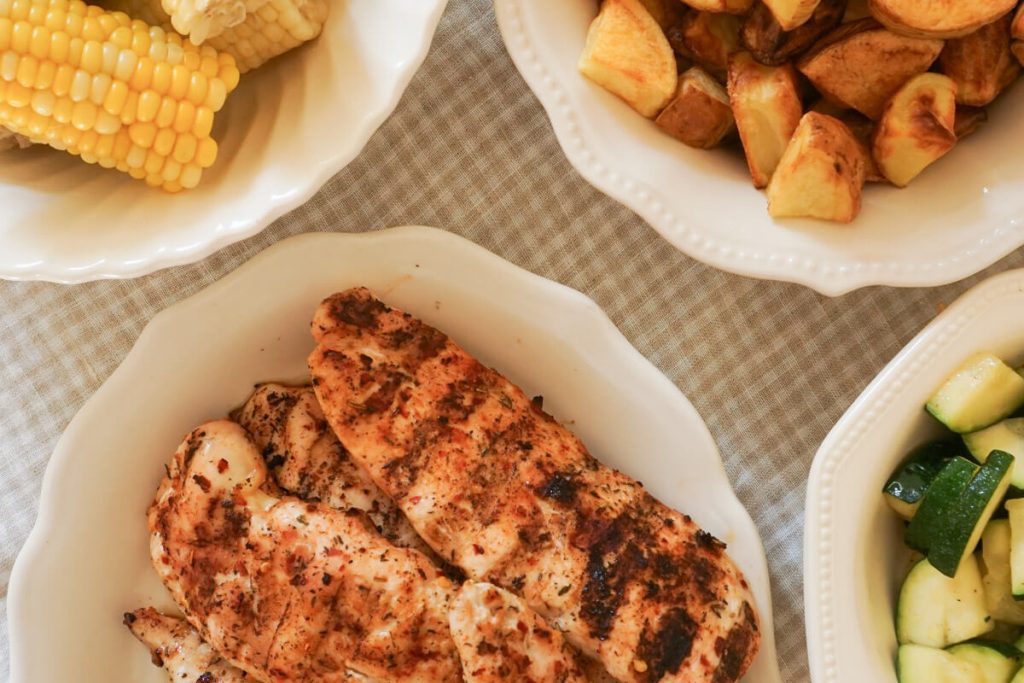
Protein is planned with intention. When I buy meat, I often go for the cheaper cuts and buy enough for two meals. This fits perfectly into my cook-once, eat-twice system. To get the best price, I usually buy the family-pack size. If I buy more than we need that week, I portion and freeze the extra so nothing goes to waste, and I’ll have a head start for future meals.
Breakfast, lunch, and desserts follow a simple rhythm
While dinners have the most structure, everything else stays simple and supportive of the same system.
Breakfast is partially made ahead
Even though I am a stay-at-home mum, I typically choose one or two make-ahead breakfasts for the week. We pair it with eggs (and sometimes a breakfast meat) every morning. This keeps mornings simple and predictable.
My husband isn’t a massive breakfast eater, but he sometimes preps a sausage, egg, and cheese bake on English muffins for work.
Lunch is flexible
For my toddler and me, lunch usually works in one of two ways:
- I make 1-2 intentional recipes designed to fully use up ingredients I already bought that week
- Or, it’s dinner leftovers, a snack plate, or a quick pantry meal
For my husband, lunch is a simple sandwich, a few packaged snacks (nuts, crackers, tuna packets, or granola bars), and fruit.
This keeps the grocery list tight and naturally reduces waste, since lunch supports dinner instead of competing with it.
Desserts are minimal
Finally, I usually pick 1–2 homemade desserts for the week, depending on what will last and what we actually want. These are also seasonal — I keep lighter, no-bake desserts for summer and heavier ones for winter. On occasion, I’m lazy, and we’ll just have ice cream.
The result: a simple, flexible weekly rhythm
When everything comes together, my week has a natural flow instead of a rigid plan:
- 3–4 planned dinners with built-in leftovers
- simple breakfasts and lunches
- seasonal ingredients and balanced meals
- less food waste and simpler grocery shopping
- room to experiment with new recipes
- sustainable from-scratch cooking and baking
- flexibility when life happens
More than anything, this system gives me structure without taking the joy out of feeding my family.
How my meal planning method works in practice (example week)
The scenario
- Season: Summer
- Dinner needed: Tuesday, Thursday, Saturday, and Monday (Monday is our next grocery trip).
- Let’s imagine that we’re going out with my parents on Friday night, so Thursday’s leftovers will go uneaten.
- Seasonal considerations: We have lettuce, zucchini, and green beans coming from the garden. Herbs + citrus are a focus.
Now to implement my system. First, I pick the main dish from each night’s theme, then I choose the sides and bread to pair it with, focusing on seasonal produce.
This week’s meals
Dinners
Tuesday = Tex-Mex Tuesday
- Main: Instant Pot salsa verde chicken (literally chicken thighs + jar of salsa cooked in the Instant Pot)
- Served with: Corn tortillas, chopped cilantro, diced onion, avocado, and lime wedges
- Fiber-focused side: Cilantro lime rice and beans
Thursday = Tradition Thursday
- Main: Chicken milanese
- Fiber-focused side: Simple summer salad or sautéed zucchini with garlic, and parmesan beans.
Saturday = Southern Saturday
- Main: Red beans and rice
- Served with: Smoked sausage on the side, parsley and green onions for topping
- Fiber-focused sides: Collard greens and cornbread — there’s already a lot of fiber in the main dish
Monday = Meaty Monday
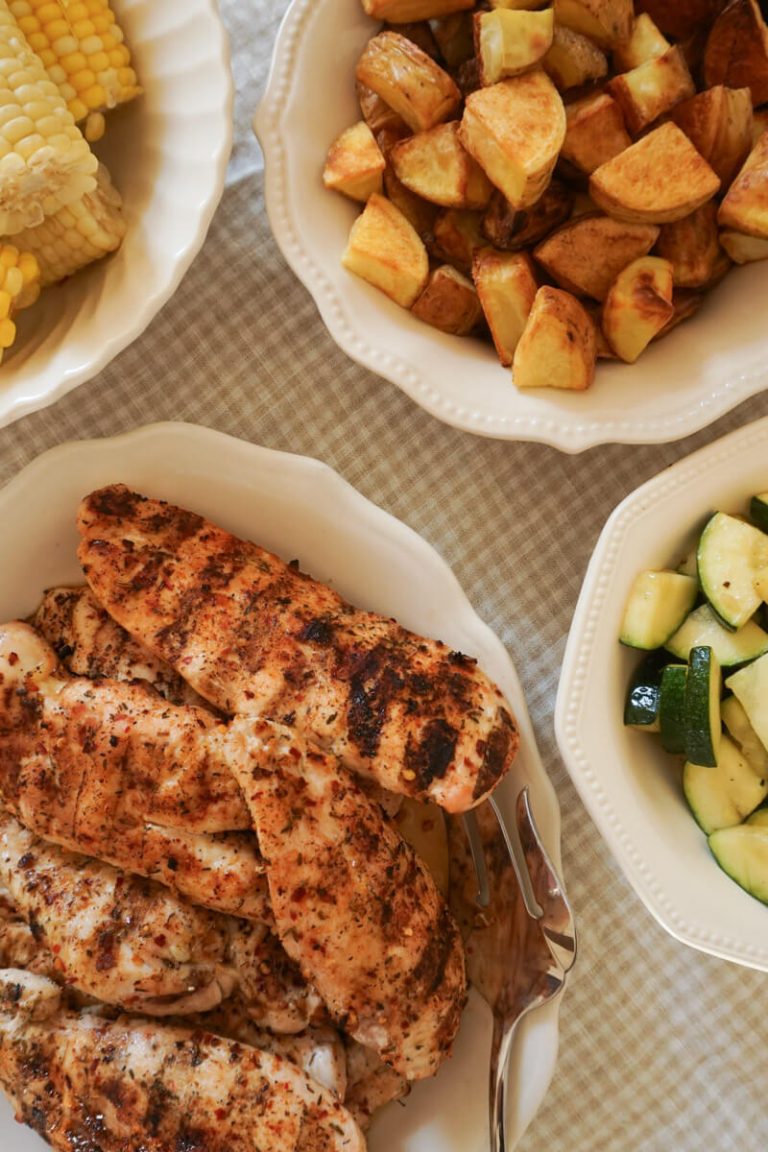
- Main: Simple grilled chicken breast
- Fiber-focused sides: Sautéed green beans, zucchini, and roasted potatoes
Breakfast, Lunch, and Dessert
Breakfast
1-2 make-ahead breakfasts + eggs
- Banana bread baked oatmeal (4 days for me and my toddler)
- Whole wheat zucchini bread
Lunch
1-2 intentional recipes, snack plates, and leftovers:
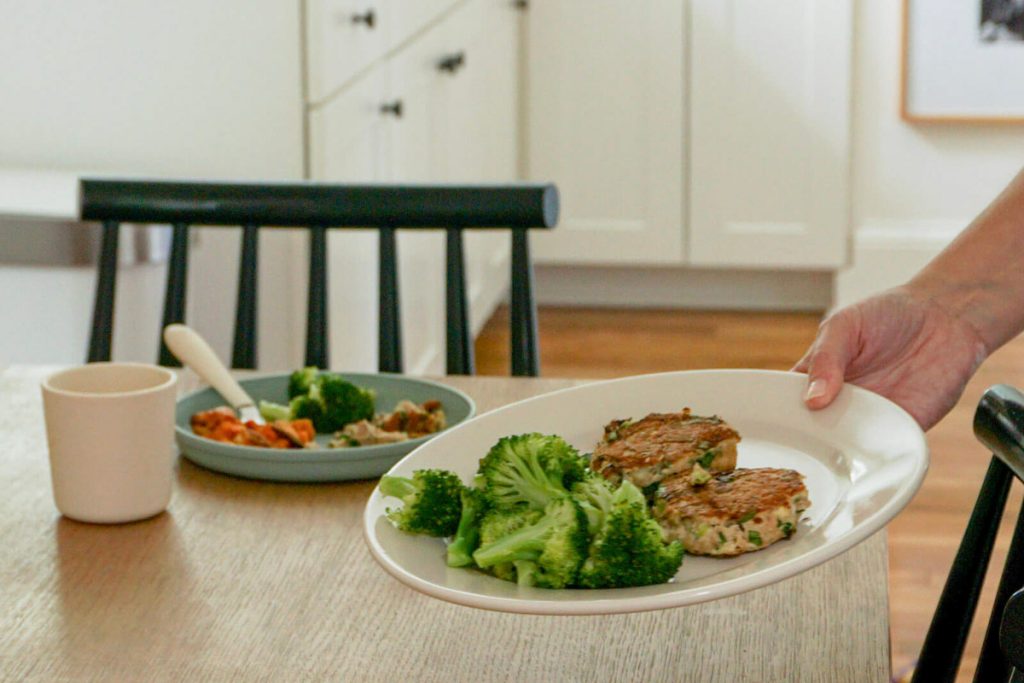
- Salmon cakes, served with salad and rice
- Snack plate: deli meat, cheese, boiled eggs, sliced cucumber, and fruit
- Chicken Milanese leftovers
- Red beans and rice leftovers (makes a lot)
Dessert / baking
- Vintage no-bake cookies
- Sandwich bread
Why this works: The parsley, green onions, and lemons get used across multiple meals and lunches, while the family pack of chicken breast is split between two dinners. I can freeze the chicken thighs we don’t use and the salmon cakes use up leftover green onions, parsley, and lemons.
Simple grocery list
Protein
- Chicken thighs (family pack)
- Chicken breast (family pack)
- Smoked sausage
- Bacon
- Ham hock
- Deli meat
Produce
- Cucumber
- Avocados (3)
- Cherry tomatoes
- Green onions
- Parsley
- Cilantro
- Lemons
- Limes
- Berries
- Clementines
- Bananas
- Collard greens
- Potatoes
Pantry
- Corn tortillas
- Salsa verde
- Canned salmon
- Canellini beans
Dairy / Eggs
- 3 dozen eggs
- Milk
- Greek yogurt
- Butter
- Extra sharp cheddar
- Sliced cheese
From this example week, I hope you see that nothing about this system is especially strict or complicated — it’s simply a sustainable framework that helps me balance nutrition, budget, seasonality, and the enjoyment of cooking without feeling overwhelmed by the responsibility of feeding my family.
Browse my ready-made meal plans
Looking for more examples of how I put this system into practice? Here are a few of my real meal plans: